

About the Project
What if every runner could know their finishing time through a small electronic chip attached to their race number?
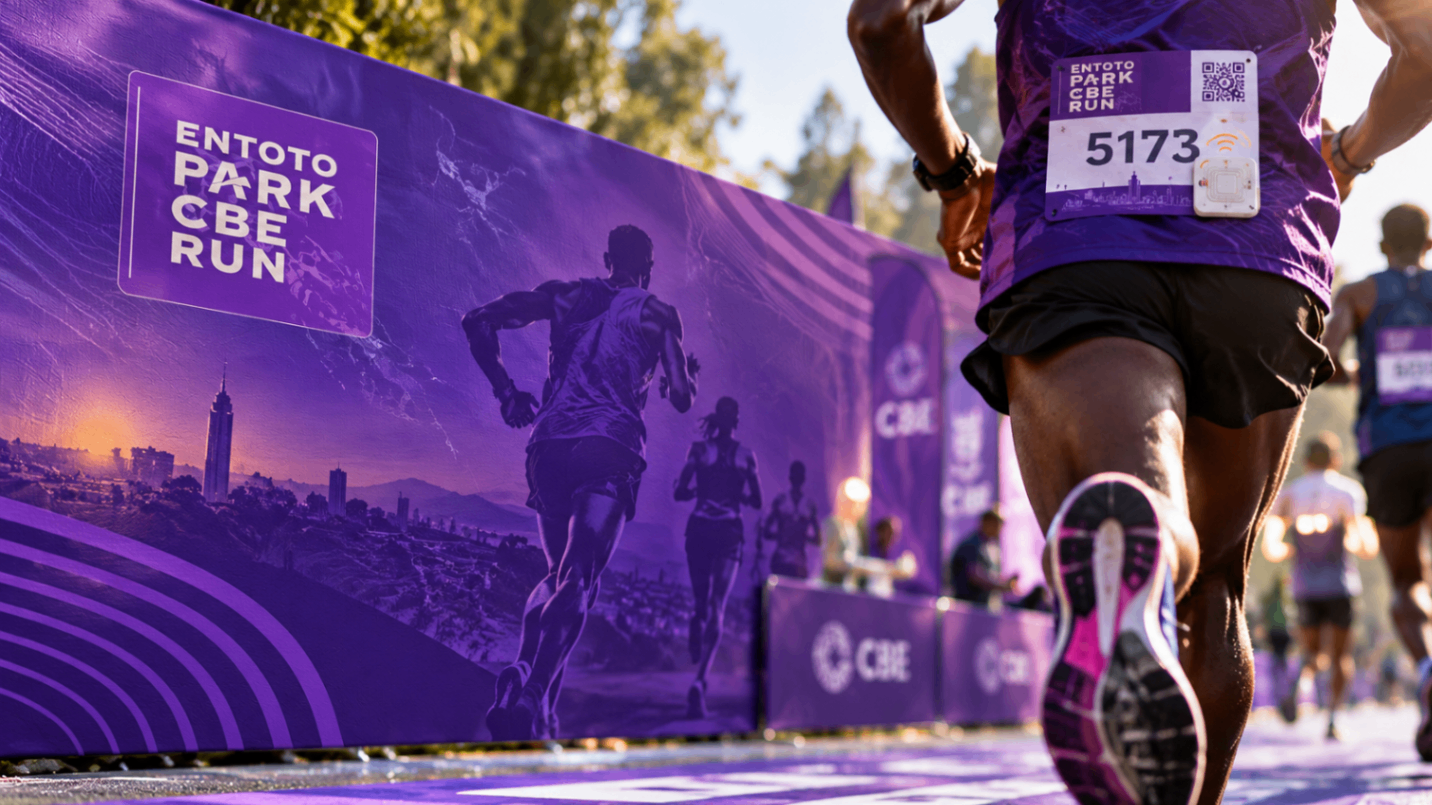
At the Entoto Park CBE Run in Addis Ababa, I had the opportunity to explore how technology is becoming part of Ethiopia's running culture.
The event, organized by Great Ethiopian Run in partnership with the Commercial Bank of Ethiopia (CBE), brought together runners, fitness enthusiasts and the technology used to manage modern sporting events.
My content focused on one particularly interesting innovation: RFID race-timing technology.
I also had the opportunity to speak with Ethiopian athletics legend Haile Gebrselassie about the role of technology in the future of Ethiopian running events.
The Challenge — Timing Thousands of Runners
Ethiopia is internationally recognized for producing some of the world's greatest distance runners.
But behind every organized race is a logistical challenge: measuring performance accurately and managing results efficiently.
In traditional race environments, collecting times manually can become increasingly difficult as participation grows.
Modern electronic timing systems offer another approach, helping organizers capture individual results and manage race data more efficiently.
How RFID Timing Technology Works
RFID stands for Radio Frequency Identification.
In a race-timing setup, each participating runner can be assigned a small electronic tag associated with their registration information.
When runners cross specially equipped timing points, antennas and readers detect their tags and record the relevant crossing information.
The system can then use these records to calculate finishing times and organize results.
What makes this fascinating is how a small piece of technology can support a much larger sporting event.
Instead of relying entirely on manual timing, electronic identification creates opportunities for more efficient and consistent race-result management.
Exploring the Technology at Entoto Park
During the CBE Entoto Park Run, I explored the RFID timing chips being used and how the technology fits into the race experience.
My approach was to explain the system from a practical perspective.
What is the chip? How does it communicate with a reader? How can runners be identified at timing points? And why does this matter for the future of organized races?
These questions helped turn a technical subject into a visual and understandable story.
A Conversation With Haile Gebrselassie
One of the highlights of this project was speaking with Haile Gebrselassie, one of Ethiopia's most celebrated distance runners.
Our conversation connected Ethiopia's extraordinary athletics history with the possibilities offered by modern technology.
The discussion explored the importance of innovation and how digital systems can contribute to the development of local running events.
For me, it was an exciting opportunity to bring together two subjects I care deeply about: Ethiopian achievement and technological progress.
Where Sports Meet Digital Innovation
Technology is transforming sports in ways that go far beyond watches and fitness applications.
Electronic timing, digital registration, athlete identification and results management can all contribute to better-organized events.
For runners, these systems can provide a more structured record of their participation and performance.
For organizers, digital tools can make certain operational processes easier to manage as events grow.
Why This Project Matters
As a technology content creator, I enjoy discovering innovations in unexpected places.
Sometimes the most interesting technology is not inside a smartphone or computer. It is working quietly behind an everyday experience.
The CBE Entoto Park Run provided a valuable opportunity to show how modern digital systems can support Ethiopia's rich athletics tradition.
By explaining RFID timing technology and speaking with Haile Gebrselassie, I wanted to help audiences appreciate the innovation taking place behind the race.
Ethiopia has a remarkable history in running. Technology can be part of how we build its future.