

About the Project
What does the future of warfare look like?
Is it still about powerful fighter jets and highly trained pilots, or is the world entering an era where artificial intelligence, unmanned aircraft and computer algorithms play an increasingly important role?
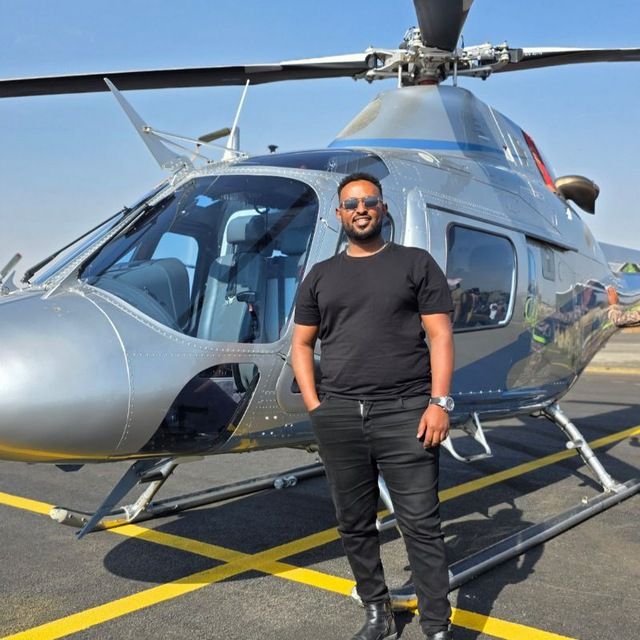
These questions inspired my technology coverage of the Ethiopian Air Force's 90th anniversary.
The celebrations, held in Bishoftu from January 23–27, 2026, brought together military aviation history, aircraft demonstrations and modern aerospace technologies.
For me, the occasion was an opportunity to explore a much bigger story: how technology is transforming military aviation and modern warfare.
90 Years of Ethiopian Aviation History
The Ethiopian Air Force traces its establishment to 1935, making it one of Africa's longstanding military aviation institutions.
Its 90th-anniversary celebrations included the Black Lion Air Show, Aviation Expo 2026 and activities showcasing the development of Ethiopia's aviation sector.
The event connected historical achievements with discussions about aircraft modernization, aviation training and future technological capabilities.
It also offered an opportunity to reflect on how much military aviation has changed over nine decades.
From Fighter Jets to Unmanned Aircraft
For much of modern aviation history, fighter jets have represented the speed, power and complexity of military technology.
Today's aerial systems are evolving beyond aircraft controlled exclusively by pilots sitting inside them.
Unmanned aerial vehicles, commonly known as drones, can carry out different tasks through remote operation or varying levels of automation.
Depending on their design, drones may be used for observation, mapping, reconnaissance and other military activities.
The growing use of unmanned aircraft is changing how military organizations think about aircraft operations, personnel safety and information gathering.
Artificial Intelligence and Modern Warfare
One of the most significant developments in military technology is the expanding role of artificial intelligence.
AI can assist with analyzing large amounts of sensor information, identifying patterns, supporting navigation and helping operators interpret complex situations.
Modern military systems increasingly combine software, communications networks, sensors and remotely operated platforms.
However, not every drone is AI-powered. Some systems are manually operated, while others use automated features without advanced AI.
The important distinction is understanding which decisions are made by technology and which remain under human control.
The Rise of Data-Driven Operations
Modern military aviation depends on more than the aircraft itself.
Radar, satellite communications, navigation systems and electronic sensors all contribute information that operators may use to understand their surroundings.
In some military applications, computer systems process this information and present it through integrated digital interfaces.
This creates an environment where computing technology, communications and information processing are increasingly important alongside traditional aviation engineering.
What I Wanted to Show
My approach to this project was to look beyond the impressive aircraft and ask what the technology means.
How are drones changing aviation? Why is artificial intelligence becoming important? How do sensors and communication systems influence the operation of modern aircraft?
These questions formed the foundation of the content.
Rather than focusing only on the visual spectacle of an air show, I wanted to explain the technological developments shaping the wider aviation and defense industries.
The Opportunities and Challenges
New military technologies create opportunities for greater automation, improved information processing and new approaches to aircraft operations.
They also raise serious questions.
How can automated systems be tested for reliability? What happens when an AI system makes a mistake? How should human oversight and international humanitarian law apply to increasingly autonomous military technology?
These are important considerations as military aviation evolves.
Why This Project Matters
As a technology content creator, I believe understanding innovation requires looking beyond smartphones, computers and consumer electronics.
Some of the world's most consequential technologies are being developed and deployed in fields such as aerospace, robotics, artificial intelligence and defense.
The Ethiopian Air Force's 90th anniversary provided a compelling starting point for exploring those developments and explaining them to Ethiopian audiences.
The future of aviation is being shaped not only by faster aircraft, but also by software, sensors, automation and the decisions people make about how to use them.