

About the Project
Have you ever wondered what it feels like to sit inside the cockpit of a Boeing 787 Dreamliner?
Most of us experience flying from the passenger cabin. We see the clouds through a window, hear the engines and wait for the aircraft to reach its destination.
But inside the cockpit, the experience is completely different.
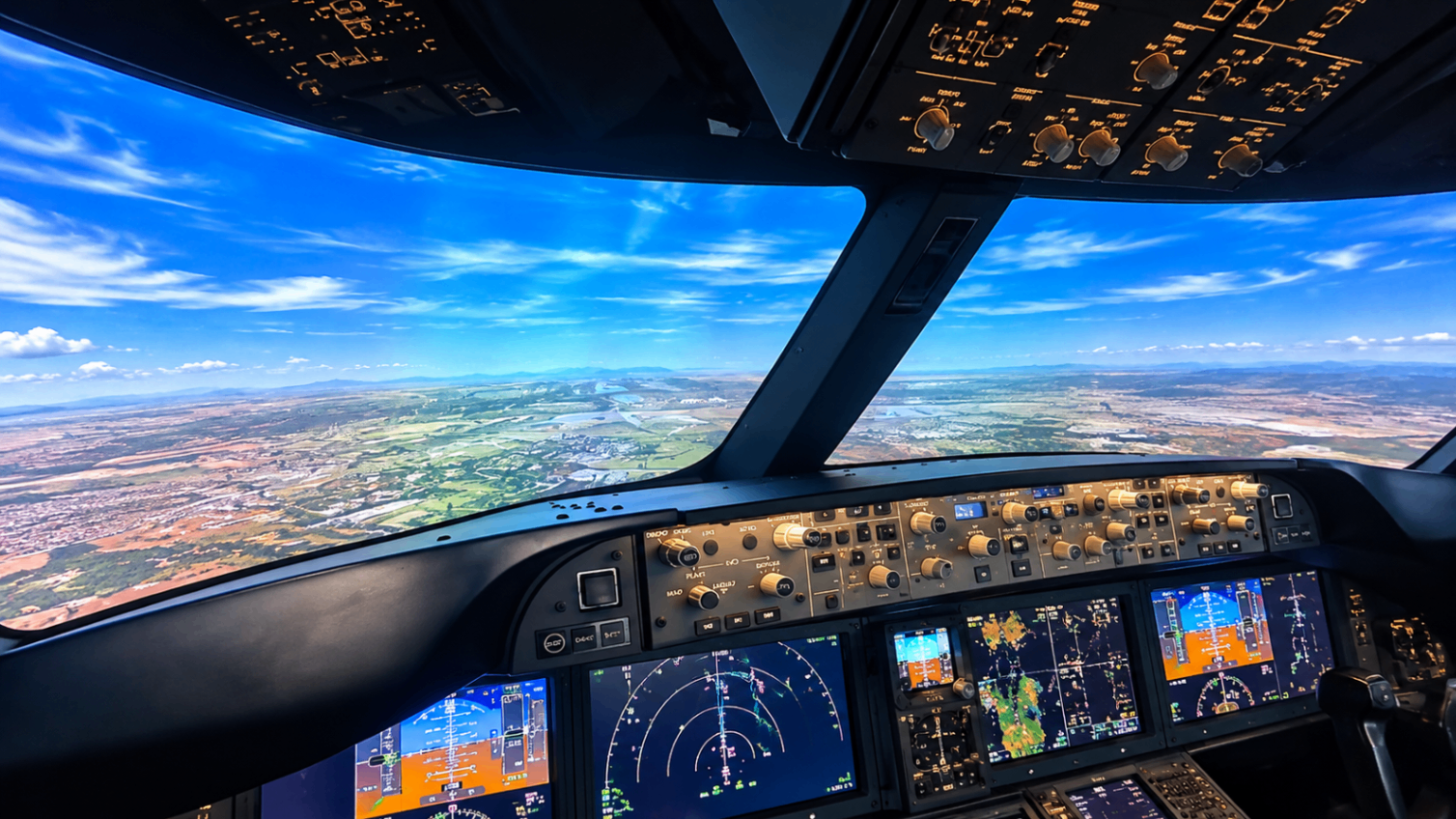
During my visit to the Ethiopian Science Museum in Addis Ababa, I explored a Boeing 787 Dreamliner flight simulator and captured a glimpse of the technology that makes simulated flying possible.
For me, it was an exciting opportunity to connect aviation, engineering, software and digital simulation in one experience.
What Is a Flight Simulator?
A flight simulator is a computer-based system designed to recreate aspects of operating an aircraft.
Instead of flying a real airplane, the user interacts with simulated flight controls, digital instruments and a virtual environment.
Depending on the simulator's design, software can represent aircraft movement, altitude, speed, direction and the changing landscape outside the cockpit.
Some advanced training simulators also include physical motion systems, but not every simulator does.
The technology provides an interactive way to explore aviation without leaving the ground.
Exploring the Boeing 787 Dreamliner Cockpit
One of the most fascinating aspects of the Boeing 787 is its modern digital cockpit.
Rather than relying entirely on traditional mechanical instruments, the Dreamliner uses electronic displays to present flight information.
These systems help pilots monitor aircraft speed, altitude, orientation, navigation and the condition of different aircraft systems.
The simulator at the Ethiopian Science Museum introduces visitors to this digital cockpit environment.
In my video, I focused on the cockpit displays, controls and large virtual view outside the aircraft.
Seeing the landscape move across the simulator screen creates a sense of what it might look like to observe the world from a pilot's position.
How Flight Simulation Technology Works
A flight simulator brings together several technologies.
Flight simulation software calculates how a modeled aircraft responds to different control inputs.
Digital cockpit instruments represent information such as airspeed, altitude, heading and navigation.
Visual rendering systems generate the simulated outside environment, including terrain, sky and the horizon.
Control interfaces allow users to interact with the simulation.
These elements work together to create an interactive aviation experience.
A museum simulator is designed primarily for education and public engagement, while certified professional simulators must meet far more demanding training and qualification requirements.
Boeing, Ethiopian Airlines and the Science Museum
The Boeing 787 Dreamliner simulator is part of a permanent aerospace exhibition associated with Boeing and Ethiopian Airlines at the Ethiopian Science Museum.
The exhibition also includes aerospace educational models representing spacecraft and space exploration technologies.
Its purpose is to make complex aviation and aerospace subjects more accessible to students, young innovators and museum visitors.
Ethiopian Airlines has a particularly meaningful connection to the Dreamliner, having introduced the Boeing 787 to its African operations in 2012.
That history makes the simulator an interesting meeting point between Ethiopian aviation achievements and modern aerospace technology.
The Creative Approach
My approach to the video was to make viewers feel like they were inside the cockpit with me.
Instead of presenting a long technical lecture, I used the simulator's visual experience to capture attention.
The immersive outside view, instrument panels and cockpit environment naturally create curiosity.
What do all those screens mean? How does the simulator make the world outside appear to move? How can a computer reproduce aspects of a real aircraft's behavior?
These are the kinds of questions I wanted the content to inspire.
Why This Project Matters
Aviation is one of the most interesting examples of different technologies working together.
Software, electronics, physics, aerodynamics, sensors and human decision-making all contribute to modern flight.
Exhibits like the Boeing 787 simulator can help visitors develop an interest in these subjects, especially young people considering future careers in engineering or aviation.
As a technology content creator, I believe it is important to introduce audiences to these experiences and make advanced technology feel understandable.
You don't always need to board an airplane to discover the technology behind flight. Sometimes, a simulator is enough to spark that curiosity.