

About the Project
What if the next big technology innovation in Ethiopia comes from agriculture?
Imagine a young developer creating an application that connects farmers directly with buyers. An entrepreneur building an AI-powered crop advisory tool. Or an innovator using drones, sensors and digital data to help farmers make better decisions.
These are the kinds of possibilities that make agricultural technology one of the most interesting areas of innovation.
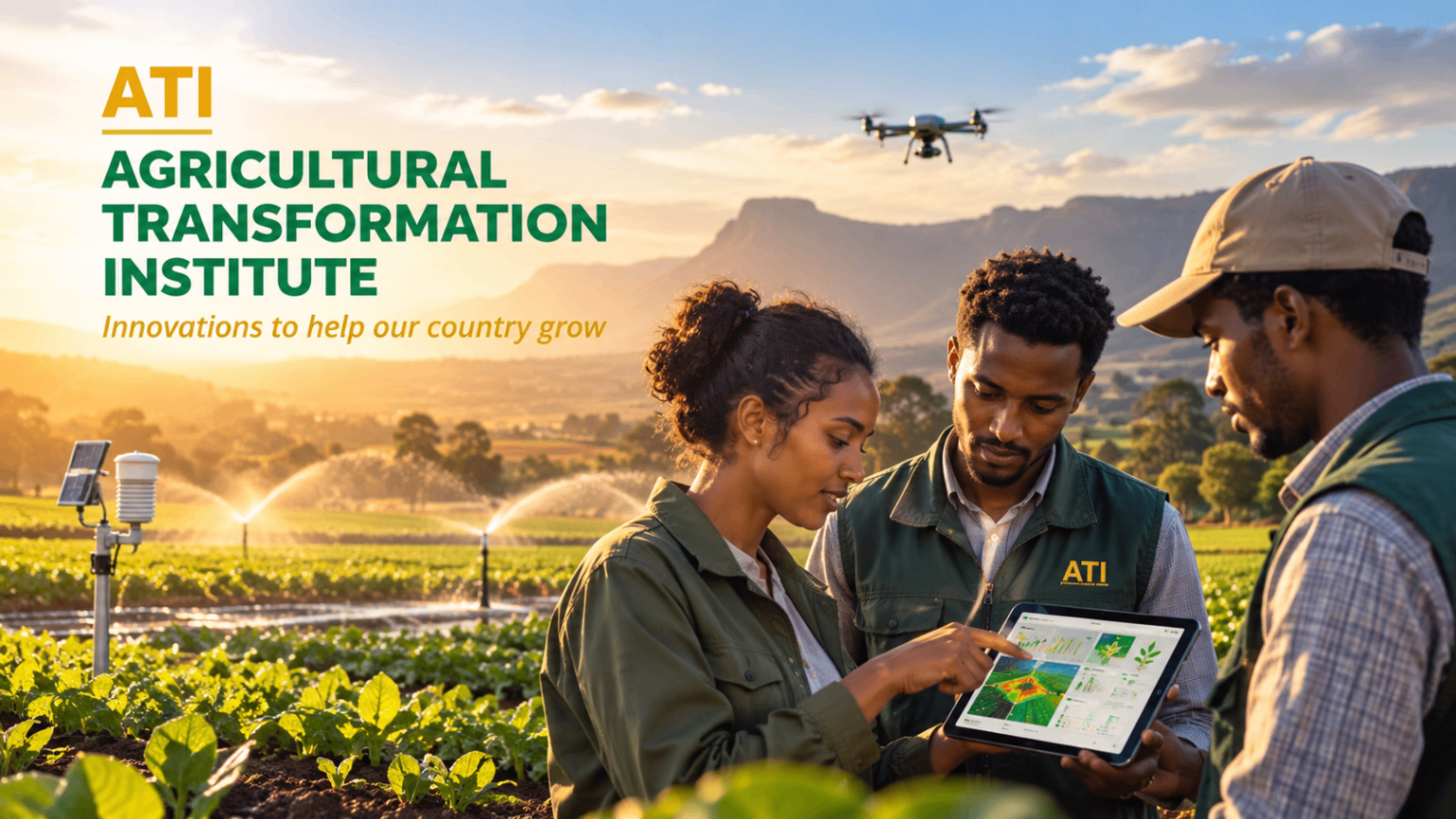
In this technology awareness project, I introduced Ethiopian entrepreneurs, young innovators and technology professionals to the Agri-Tech Innovation Competition organized by the Agricultural Transformation Institute (ATI).
My goal was to encourage people with promising ideas to explore opportunities to develop solutions for Ethiopia's agricultural sector.
Agriculture Meets Technology
Agriculture plays a central role in Ethiopia's economy and the livelihoods of millions of people.
However, the sector faces challenges involving productivity, market access, logistics, information and access to modern agricultural services.
Technology creates opportunities to address some of these challenges.
Digital platforms can help connect producers to markets. Data-driven systems can improve access to information. Mobile applications can make agricultural services easier to reach.
Artificial intelligence, remote sensing and digital recordkeeping are also creating new possibilities for agricultural innovation.
The key question is no longer whether technology can be useful in agriculture, but how innovators can develop practical solutions that work for Ethiopian farmers.
Introducing the ATI Innovation Challenge
The Agricultural Transformation Institute has established a Digital Agriculture Innovation Challenge to identify and support promising agritech startups, innovators and technology providers.
The initiative focuses on digital solutions that address real problems across agricultural value chains.
Rather than concentrating only on ideas, the program is structured to help participants refine their concepts and move toward solutions that can be tested and brought to market.
Its approach includes innovation sprints, incubation, mentorship, technical assistance and commercialization support.
For young entrepreneurs who want to turn their ideas into functioning products or services, this kind of support can be valuable.
From an Idea to a Working Solution
One of the most interesting aspects of the challenge is its focus on development beyond the initial application.
The program includes four major stages:
Challenge Setting: Identifying important problems that technology can help address.
Innovation Sprint: Helping teams develop and refine their proposed solutions.
Incubation: Providing mentorship, technical assistance and business development support.
Commercialization: Supporting selected innovations as they move toward market deployment and scaling.
ATI reports that its first cohort attracted 372 applications, with 50 teams selected for initial innovation activities and 20 advancing into incubation.
These figures highlight the interest among Ethiopian youth and startups in solving agricultural problems through technology.
The Creative Approach
The central message of my video was simple:
If you have an agricultural technology idea, don't leave it as an idea. Explore opportunities to turn it into something real.
Rather than treating the competition as a routine announcement, I presented it as an opportunity for young people to think differently about entrepreneurship.
A solution doesn't need to begin with a large company or expensive equipment.
Sometimes, it starts with identifying a problem experienced by farmers and creating a practical way to solve it.
I wanted viewers to recognize that software developers, entrepreneurs, students and innovators can all contribute to the future of agriculture.
Why This Opportunity Matters for Ethiopian Youth
Young Ethiopians are increasingly exploring technology, digital business and entrepreneurship.
At the same time, agriculture remains one of the country's most important economic sectors.
Connecting these two areas could help create opportunities for useful products, new businesses and better services.
Programs such as ATI's Innovation Challenge create an environment where innovators can receive feedback, refine their business models and develop solutions with practical agricultural applications.
The value extends beyond winning a competition. It includes learning, collaboration and the opportunity to build something with real-world relevance.
Why This Project Matters
As a technology content creator and entrepreneur, I believe innovation becomes more powerful when people know where to find opportunities.
There may be a young Ethiopian developer with a promising solution for farmers. There may be a startup working on digital marketplaces, smart irrigation or agricultural information systems.
Sometimes, the next important step is simply discovering the right platform to develop that idea.
Through this content project, I wanted to connect young Ethiopian innovators with an initiative focused on practical agricultural transformation.
The future of Ethiopian agriculture will be shaped not only in the fields, but also by the ideas, technologies and entrepreneurs working to improve them.